Check the Evidence on Daily Weighing and How to Keep a Weight Record
Key Takeaway
Daily weighing is not essential for everyone. A 2024 systematic review favored monitoring alongside diet and activity management; that differs from weighing more often alone.
Is there evidence that weighing alone causes weight loss?
Hallock and colleagues' 2024 review gathered 31 adult studies from 2019 to 2023. It favored regular weighing alongside diet and activity tracking, but included observational studies and self-reports. These findings cannot establish the effect of weighing frequency alone.
In Madigan and colleagues' 2015 meta-analysis of randomized trials, only one study tested weighing as a standalone strategy, without clear evidence of effectiveness. A 2016 correction addressed a unit error and reanalysis. When reading weight-loss figures, check the correction as well as the original abstract.
Is daily or weekly weighing better?
The frequency comparison in the 2015 meta-analysis found no statistically significant difference in weight loss between interventions instructing daily and weekly weighing. The 2024 review favored more frequent monitoring, but findings drawn from different studies cannot establish your optimal personal schedule.
Consider the purpose of public-health guidance too. The CDC's 2023 weight-maintenance advice includes recording weight weekly alongside food and activity tracking. The NHS general measurement leaflet suggests consistent times at regular weekly-to-monthly intervals. Do not use this general advice to replace a schedule set by your treatment program.
How can you make weight records comparable?
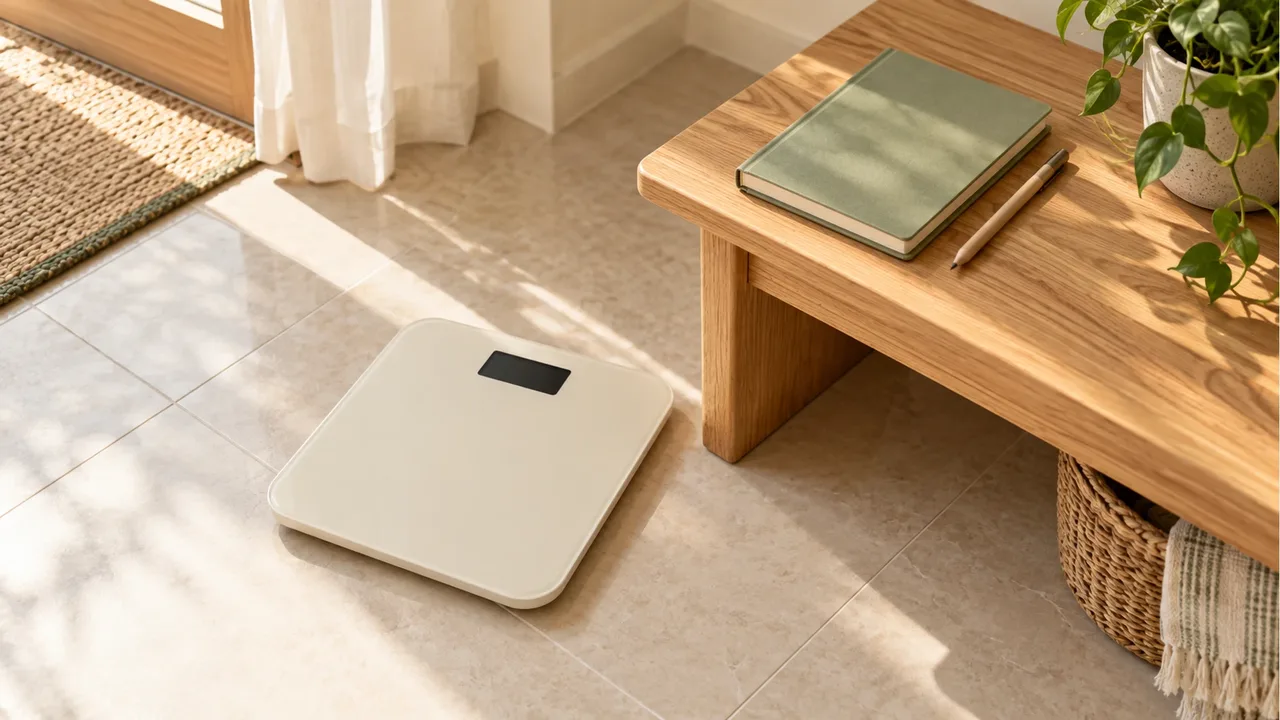
The official NHS PDF recommends using the same scale in the same location, at a consistent time, preferably in the morning. Use a firm, level floor rather than a soft mat, and wear similar clothing. Noting changes in measurement conditions alongside readings can make comparisons easier.
- Check the scale's unit and use that same unit in your record.
- Choose a consistent location and time, and remove shoes and heavy items.
- Stand still until the display settles, then record the date and reading.
Your record can include the date, time, weight and any unusual measurement conditions. Choose an app or paper format you can keep using. You do not need to buy a new scale or paid app to begin.
What everyday information can you record alongside weight?
The CDC recommends tracking food and activity together to identify recurring patterns in everyday life. When weight changes, you can look at food, drinks and activity records from the same period. Do not use a single reading to establish the effect of a particular food or exercise.
NIDDK also recommends checking monitoring methods and ongoing support when choosing a weight-management program. Ask program staff how often they review records and what feedback they provide. For activity records, see how to record weekly aerobic exercise minutes.
When should you speak with a professional?
If weighing makes you anxious or the number leads you to restrict food excessively, tell a health professional before increasing measurement frequency. The 2024 review also calls for individual consideration for people at risk of eating disorders or psychological distress.
If you receive medical care, bring information about medicines and supplements alongside food and activity records. NIDDK explains that a clinician can review this information and discuss a plan suited to you. This article does not replace individual diagnosis or treatment.
Product information
Candidates compared
-
Xiaomi Smart Scale S200 White
-
Xiaomi Body Composition Scale S400 (MJTZC01YM)
Product information is as of the date checked.
Frequently Asked Questions
Does daily weighing lead to more weight loss than weekly weighing?
A 2015 meta-analysis of randomized trials found no statistically significant difference between interventions instructing daily and weekly weighing. A 2024 review favored frequent monitoring, but study designs and accompanying support differed. Daily weighing is therefore difficult to prescribe as the answer for everyone.
What if I am pregnant or recording weight for a medical condition?
Do not directly apply this article's adult weight-management schedules. Follow any measurement and reporting instructions provided for pregnancy or your condition, and ask your care team before changing them.
Where can I check the research and measurement instructions?
Read the methods in the 2024 review and PubMed abstract below, together with the correction to the 2015 paper. The official NHS PDF explains scale placement, clothing and recording steps.
Sources & Verification Date
- Hallock et al. Self-Monitoring of Weight as a Weight Loss Strategy: A Systematic Review (2024, September correction incorporated) · Verified
- Madigan et al. Is self-weighing an effective tool for weight loss: a systematic literature review and meta-analysis (2015) · Verified
- Madigan et al. Erratum to: Is self-weighing an effective tool for weight loss (2016) · Verified
- NHS England, How to Record Your Weight (official patient leaflet PDF) · Verified
- CDC, Tips for Keeping Weight Off (November 15, 2023) · Verified
- NIDDK, Choosing a Safe & Successful Weight-loss Program · Verified