Check What to Read First on Nutrition Labels of Diet Lunchboxes and Chicken Breast
Key Takeaway
For diet lunchboxes and chicken breast, read five lines in order: calories, protein, dietary fiber, sugars, and sodium. Measured against the agency's guide, the label tells you more than the product name.
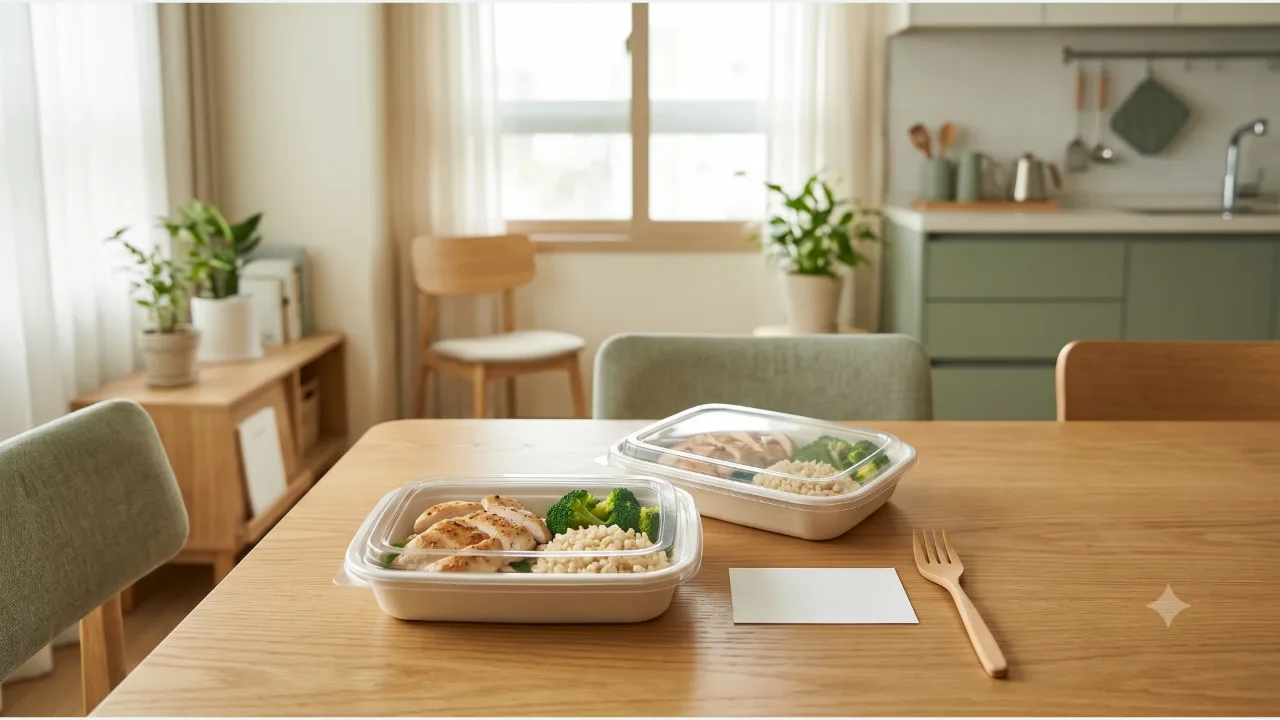
The criteria come from the weight-management meal guide on the Korea Disease Control and Prevention Agency's National Health Information Portal (2026 update). You can read chicken breast and diet lunchbox products from the Coupang search list of October 13, 2026, sorted by sales, the same way.

How do you estimate your daily calories?
The agency's calculation example has three steps. Work out standard body weight from your height, multiply by a value that matches your activity level to get an appropriate calorie level, then cut 300 to 500 kcal from that. As typical plans, it gives 1,200 to 1,500 kcal for women and 1,500 to 1,800 kcal for men. These values are examples, and your own target may differ.
Which lines on the nutrition label should you read first?
| What to check | Criterion | Source |
|---|---|---|
| Calories | What fraction of your daily plan one meal takes up | KDCA weight-management meals |
| Protein | About 0.8 to 1.2 g per kg of ideal weight (per day) | KDCA weight-management meals |
| Dietary fiber | 25 g a day recommended for adult men, 20 g for women | KDCA weight-management meals |
| Added sugar | 10% or less of total daily calories | KDCA weight-management meals |
| Sodium | WHO recommends 2,000 mg a day (5 g of salt) or less | KDCA salt guidance |
Don't try to meet the daily criteria with a single lunchbox. Work out what fraction of your whole day's eating it makes up. Chicken breast with sauce and fried-rice lunchboxes tend to run high in sodium and sugars, so it is better to look at those two lines first.
What should you compare when choosing products from a Coupang list?
I picked products that people favor most. Compare chicken breast products with the same purpose rather than the same model.
- Put the grams of protein and the calories in one pack into your daily plan.
- Check the sodium and sugars in the sauce and seasoning.
- Check the storage method, the frozen or refrigerated label, and the allergen labeling.
- Plan to fill your dietary fiber separately, with vegetable and whole-grain side dishes.
When should you talk to a professional?
If you have high blood pressure, kidney disease, or diabetes, or you are on a restricted diet, talk to your doctor or a dietitian before settling the sodium and protein amounts in lunchboxes and chicken breast. This article does not replace diagnosis or prescription.
Product information
Candidates compared
-
Harim Matdak Chicken Breast BBQ Flavor
-
Hankkitongsal Whole-Cut Sauce Chicken Breast 14-Flavor Set
Product information is as of the date checked.
Frequently Asked Questions
Is chicken breast automatically a diet meal?
No. The Korea Disease Control and Prevention Agency says to look at the amount and balance of all nutrients, not one food alone. Sauce and processing change the sodium and sugar, so check the nutrition label.
How do I set my daily calories?
The agency's example multiplies standard body weight by a factor for your activity level, then cuts 300 to 500 kcal. It gives 1,200 to 1,500 kcal for women and 1,500 to 1,800 kcal for men as typical plans. Set your own target with a doctor or dietitian.
How much sodium should I aim for?
The WHO recommends no more than 5 g of salt (2,000 mg of sodium) a day, and 1 g of salt contains about 400 mg of sodium. If you have a medical condition, confirm your personal limit with your doctor.
Sources & Verification Date
- Meals for healthy weight management (Korea Disease Control and Prevention Agency, National Health Information Portal, updated 2026-06-05) · Verified
- How to eat salt healthily! Here is what you need to know! (Korea Disease Control and Prevention Agency, National Health Information Portal, updated 2026-05-06) · Verified
All materials have been verified from official announcements and may have changed since verification.